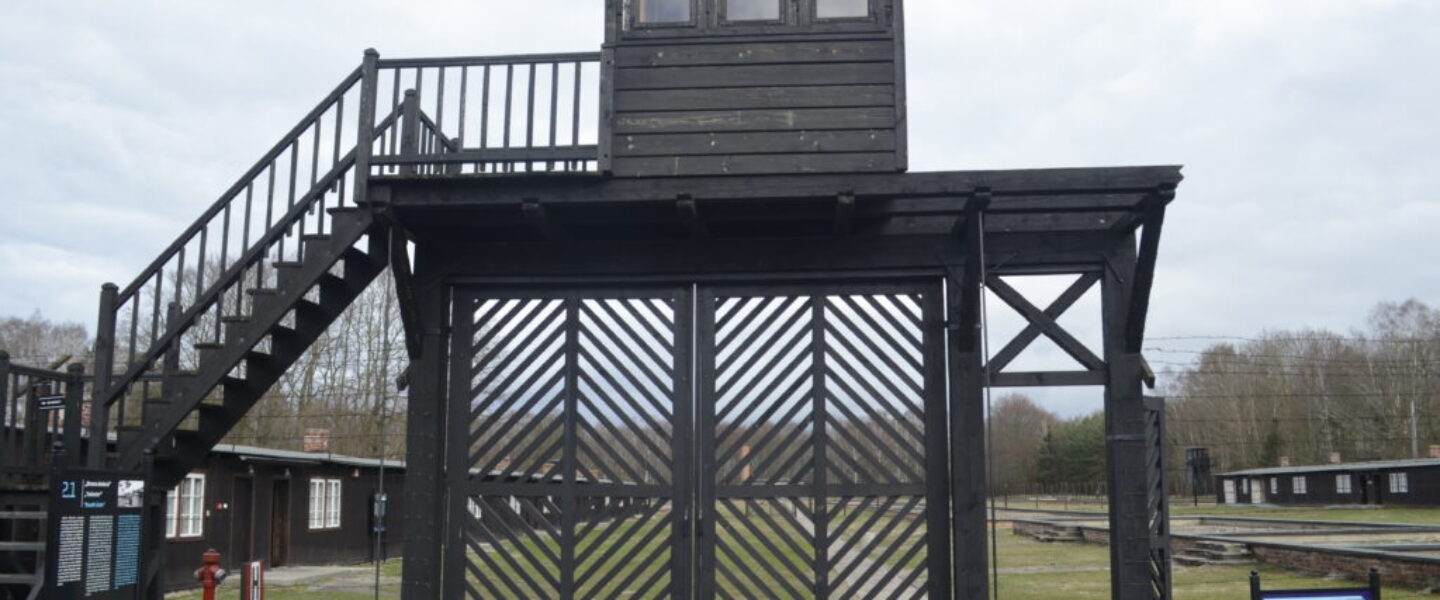
The Stutthof Concentration Camp stands as a somber testament to one of the darkest chapters in human history. Situated near the town of Sztutowo, approximately 34 kilometers east of Gdańsk, Poland, Stutthof was one of the first Nazi concentration camps established during World War II outside German borders. As a site of immense suffering, torment, and loss, a visit to Stutthof is not merely a journey through time; it is a profound exploration of the depths of human cruelty and resilience.
Established in September 1939, shortly after the German invasion of Poland, Stutthof initially served as a civilian detention center. However, its purpose soon evolved into one of persecution, imprisonment, and extermination. Over its six years of operation, from 1939 to 1945, Stutthof became a site of unimaginable horror, where thousands of innocent men, women, and children were subjected to unspeakable atrocities.
Upon arrival at Stutthof, prisoners were met with the chilling reality of their new existence. They faced overcrowded barracks, inadequate food rations, and grueling forced labor. For many, this was just the beginning of their ordeal. The brutality of the camp’s overseers knew no bounds, as prisoners endured beatings, torture, and arbitrary executions on a daily basis. The haunting echoes of suffering still linger within the camp’s walls, a haunting reminder of the atrocities committed within its confines.
One of the most chilling aspects of Stutthof was its use as a site for medical experimentation and genocide. Prisoners were subjected to horrific medical procedures, including sterilization, infectious disease research, and exposure to extreme temperatures. These experiments served no scientific purpose but were instead part of the Nazis’ quest for racial purity and domination. The suffering endured by those subjected to these experiments is a stark reminder of the depths of human depravity.
Despite the unimaginable hardships they faced, the prisoners of Stutthof demonstrated remarkable courage, resilience, and solidarity. Through acts of defiance, sabotage, and clandestine resistance, they maintained a semblance of humanity amidst the inhumanity surrounding them. Their stories of bravery and survival serve as a beacon of hope in the face of adversity, a testament to the indomitable spirit of the human soul.
Today, a visit to Stutthof is a solemn and reflective experience, offering visitors the opportunity to bear witness to the atrocities of the past and to honor the memory of those who perished within its walls. The camp has been transformed into a memorial and museum, preserving its history and ensuring that future generations never forget the horrors of the Holocaust.
Walking through the camp’s grounds, visitors are confronted with the stark realities of life and death in Stutthof. The barracks, watchtowers, and crematoriums stand as silent witnesses to the suffering endured by its prisoners. Personal belongings, photographs, and artifacts recovered from the camp offer poignant reminders of the individuals who once called Stutthof home.
Among the most moving aspects of a visit to Stutthof are the personal stories of those who lived and died within its walls. Exhibits detailing the experiences of prisoners, survivors, and liberators provide a human face to the incomprehensible tragedy of the Holocaust. Through these stories, visitors are able to connect on a deeply emotional level with the individuals whose lives were forever altered by the horrors of Stutthof.
In addition to its role as a memorial and museum, Stutthof serves as a place of education and remembrance. Guided tours, lectures, and educational programs offer visitors the opportunity to learn about the history of the camp, the Holocaust, and the broader implications of genocide and mass atrocity. By bearing witness to the past, visitors are empowered to confront intolerance, discrimination, and hatred in all its forms.
A visit to Stutthof is not easy. It is a journey into the darkest recesses of human history, where the depths of cruelty and suffering are laid bare. Yet, it is also a journey of remembrance, reflection, and ultimately, hope. As we pay tribute to the victims of Stutthof, we reaffirm our commitment to ensuring that such atrocities never again occur. In honoring their memory, we pledge to stand against hatred, bigotry, and injustice, and to strive for a world where all are treated with dignity, respect, and compassion.